
Driving Tips
All Season Tires vs Winter Tires Safety, Performance, and Value

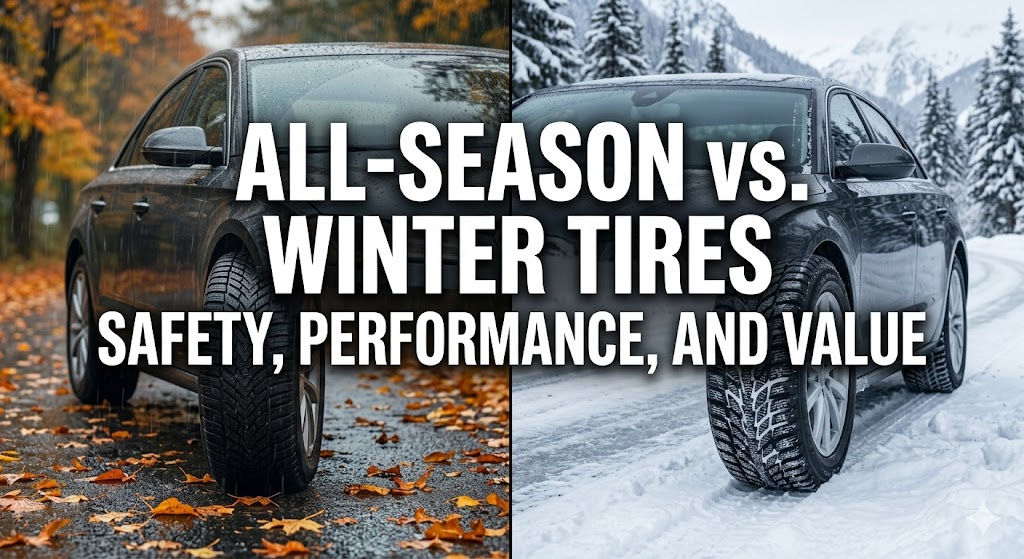
All Season Tires vs Winter Tires: Tire performance is one of the important things most drivers care less about. Most of us think that all tires are the same as long as they are still good. But we must understand that some tires work differently in certain seasons and roads. We’ll be part of this debate, all-season vs winter tires: which one is better?
To some people, all-season tires can “handle everything.” That belief is where many people get it wrong.
Tires react to temperature. It’s not only not rain or snow that affects them. So the one you buy matters a lot.
What Are All-Season Tires?
All-season tires provide balanced performance in a variety of conditions, such as dry pavement, light rain, and even in cold weather conditions. They are built for moderate temperatures. However, they are not your regular tires.
They have a rubber compound that stays solid in mild temperatures. The tread design also achieves a traction balance. But here’s the truth: All-season tires are not for extreme conditions.
They work best when:
- Temperatures stay above 7°C.
- Snow is light or occasional.
- Roads are mostly dry or wet, not icy.
What Are Winter Tires?
Winter tires are specially designed for cold weather. They also refer to snow tires. The tires are softer than regular tires and stay flexible at icy temperatures.
Winter tires stay soft in the cold, so they cling to the road instead of turning hard and slippery.
Their deeper, more aggressive tread has tiny cuts called “sipes” that dig into snow and ice, giving you better control.
Where winter tires work better:
- Temperatures drop below 7°C.
- Roads are icy or snowy.
And the statement when winter is coming or already here, is nothing but true. You need tires that provide good stopping power and that you can trust. In short: winter tires are not just nice to have, they’re a necessity.
All-Season Tires vs Winter Tires: The Difference
There are ways to differentiate between these. Amongst them are:
Temperature
When the temperature drops, all-season tires turn hard. This, in turn, makes road traction more difficult.
Winter tires are not the same. They remain flexible even at freezing temperatures, so it allows them to maintain road contact.
This tiny difference can add several meters to the distance your car has to stop, and those extra meters might be the difference between stopping safely and crashing.
Performance Comparison: Where Each Tire Rates High
Let’s see how they perform in the field.
Dry Roads
All-season tires have an edge here.
They offer:
- Better Handling
- Reduced rolling resistance
- More comfortable ride.
Winter tires are designed for cold and snow, so on dry roads, they can feel softer and a bit wobbly, not quite as sharp as all-season tires. If you mostly drive on dry roads, go for all-season tires.
Wet Conditions
Both tires are good, but all-season tires perform better in heavy rain because of their tread design. But winter tires still have good grip due to their soft rubber.
Snow and Ice
This is where winter tires rate better.
They offer:
- Shorter braking distance
- Better cornering control
- Better traction on icy roads.
All-season tires have a hard time here. They can’t grip ice, and braking becomes unpredictable.
Cold Weather (Without Snow)
What most people don’t know: all-season tires also harden and get slick in cold temperatures even on dry roads. Winter tires are soft and sticky, and they have superior grip in cold weather.
So without snow, winter tires still have that advantage in cold weather.
Why You Need To Pay Attention to This
If you use it at the wrong time of year, you are more likely to have an accident. See how each works:
All-season tires in winter:
- Longer braking distances
- More likely to skid
- Less control when making sudden movements.
Winter tires:
- Stop your car more effectively.
- Better response to steering
- Minimize the risk in cold weather conditions.
Cost Comparison: Immediate versus Long Term
A lot of people get all-season tires because they appear to be more affordable upfront. But this is the broader perspective.
All-season tires:
- Lower upfront cost
- You don’t have to swap them out seasonally.
- If you use them all year round, they wear out more quickly.
Winter tires:
- Higher upfront cost
- You need to switch twice a year.
- Have a longer life when used only in winter.
Convenience vs. Performance
It is all about what is important to you.
All-season tires
- Convenient: no seasonal change, no storage worry
- Good for casual driving.
Winter tires
- Performance-oriented: safer, better grip, more control in more extreme conditions.
The question is, do you want convenience, or do you want absolute safety?
When All-Season Tires Make Sense
All-season tires work well if:
- You live somewhere warm or mild.
- Snow is rare or light.
- Temperatures rarely fall below 7°C.
When Winter Tires Are the Better Choice
Winter tires are better if:
- You live in a cold climate.
- Even if the road appears dry, normal tires begin to wear.
- When temperatures continue to fall below 7°C.
Winter tires are therefore the safer option if you want control when you brake, turn, or drive in challenging situations.
Also, if you frequently visit colder regions, they are necessary and shouldn’t even be debated.
All-Season Tires vs. Winter Tires to Buy
Now that you understand how all-season tires vs. winter tires work, the next question is what are the tires to buy? Here are the top choices.
- Michelin CrossClimate2 (All-Season Tire)
If you want a premium all-weather tire, the Michelin CrossClimate is a great option. This isn’t just an ordinary all-season tire, it gives you a glimpse of what “all season”truly means.
Features:
- Severe snow rated (3PMSF)
- Strong braking on dry and wet roads
- Good snow traction for an all-season tire
- Long tread life and reliable performance.
- Longer Tread Life
- Shorter braking distances.
Most tires lose grip gradually, but this one maintains more grip.
- Goodyear Assurance
WeatherReady (All-Season Tire)
This tire is more aligned with safety and daily comfort. It just makes you feel comfortable especially in unpredictable weather.
Main features:
- Weather Reactive Technology
- Reliable traction in rain and cold snow
- Engineered for variable weather
- Smooth and quiet ride
- Good grip, even when it gets cold.
- Bridgestone Blizzak WS90 (Winter Tire)
For sedans, minivans, and crossovers, the Bridgestone Blizzak WS90 is a top-notch studless winter tire that provides outstanding ice braking, snow traction, and wet-road handling.
Its biting edges and multicell technology give it exceptional grip on ice. Although it can be noisy on dry pavement, it is highly regarded for harsh winter conditions.
The road comes through for you when it becomes slick or uneven.
Key Features
- Superior Ice & Snow Traction
- Improved Handling Excellent Slush and Water Performance
- Superior traction on ice and snow-packed surfaces
- Reduced braking distance on a cold road
- Developed a tread compound that remains flexible in cold temperatures
- Robust stability during emergency stops.
- Michelin X-Ice Snow (Winter Tire)
If you’re seeking a winter tire that offers a good balance of performance and comfort, this is a solid choice.
The Michelin X-Ice Snow tire was developed for people that drive SUVs, and electric vehicles and want the best safety, stopping power, on ice, slush, and snow.
It provides outstanding snow traction, long-lasting performance, and ice braking. It has Flex-Ice 2.0 compound and a V-shaped tread design.
Also, it doesn’t just grip quietly and smoothly, it grips.
Features:
- Superior Winter Grip
- Long-Lasting Performance
- Flex-Ice 2.0 Compound
- EverWinterGrip Technology
- More traction on deep snow and icy highways
- Tread wear: longer than many winter tires
So, which one should you choose?
Here’s the honest way to look at it:
If you want convenience, go for all-season (like CrossClimate2).
If you want maximum safety in the cold, go for winter (like Blizzak or X-Ice Snow).
Related Post:Does Air Conditioning in a Car Use Gas? The Definitive Guide to Fuel Efficiency and Cooling
Common Mistakes People Make
Let me clear up a few things.
All-season tires work fine in snow.
They do, but not safely, on packed snow or ice.
Winter tires are only for snow
Wrong. They’re designed for cold temperatures, and not just for snow.
I don’t drive much, so I don’t need winter tires.
Even short trips can be hazardous when you don’t have traction. Winter tires wear out quickly. They only get worn out more if you drive in the warm weather.
How to Tell If Your Tires Are Suitable
There are many drivers who don’t even know the type of tire they have on their vehicle, and that can be dangerous, especially when road conditions change.
The good news is that you don’t have to be an auto expert to know this. Do this:
Start with the tread
Winter tires have a higher and more aggressive pattern. You’ll see deep cuts and small slits on the surface of the tire. Those little features allow it to bite into snow and ice, rather than just gliding across them.
All-season tires have a slightly more balanced and muted look since they are designed for normal, everyday roads and not extreme winter roads.
Look at the sidewall of the tire
Winter tires are easily recognizable: they have a small mark in the shape of a three-peak mountain with a snowflake inside.
That symbol indicates that the tire has been cold-weather engineered and meets certain winter performance requirements. If it isn’t present, you’re likely looking at an all-season tire instead.
How the rubber feels
When you touch winter tires, they feel soft and it is that softness that keeps them flexible in cold weather, so they grip the road better.
If your tires don’t have that softer feel, along with aggressive treads and the snowflake symbol, you’re probably using all-season tires.
And that’s perfectly fine as long as the roads and weather match what they’re designed for.
Fuel Efficiency and Wear
Tires do more than keep you safe, they can also affect your fuel economy and how long they last.
All-season tires are built with efficiency in mind. They roll more easily, so your engine doesn’t have to work as hard, which can save fuel.
Also, when you drive in mild or warm conditions, they wear a little more evenly, which can help them last longer.
Winter tires act differently. The tires are made of softer rubber and have a higher rolling resistance. That can cause a bit of extra fuel consumption not a lot, but if you drive a lot, you’ll feel it.
They do wear down faster in warm weather. The same softness that makes them stick to snow and ice has the opposite effect in the warmth, as rubber wears faster there and they lose performance.
Drive each tire in the environment for which it is designed and you will not only drive safer, but your tires will also last longer.
All-Season Tires vs. Winter Tires: The Verdict
If you reside in a place with a mild climate, say the South or California, an all-season tire is capable of doing just about everything.
They’re simple to use, comfortable to drive on a day-to-day basis, and you don’t have to stress about swapping them out for the seasons.
On the other hand, if you live in a cold climate, where you regularly experience icy windshields and snow-covered roads, go for winter tires.
FAQs
1. Can I use all season tires in winter?
You can; however, that doesn’t mean you should use them in harsh conditions. All season tires handle light snow, but once temperatures drop and roads get icy, their grip reduces.
You may notice longer braking distances or less control. If winter is mild, they’re fine. If it’s harsh, they fall short.
2. Are winter tires only useful when it snows?
Not at all. Winter tires are for cold temperatures, not just snow. Even on dry roads. Once it gets below 7°C, they stay soft and grip better than all season tires, which can lose traction.
3. Do I really need to switch tires every season?
It depends on where you live. In colder regions, switching between all season and winter tires gives you the best performance year-round. But in warmer places where winter isn’t extreme, you can stick with all season tires.
- Are winter tires worth the extra cost?
If you drive in cold or snowy conditions, yes. They improve safety, reduce the risk of accidents, and give you better control.
5. Can winter tires be used all year round?
You can, but it’s not a good idea. Winter tires wear out faster in warm weather and don’t perform well on hot, dry roads.
You’ll also lose fuel efficiency. They’re built for cold conditions, so using them year-round reduces their effectiveness.
Final Thoughts
When it comes to all-season tires vs. winter tires, the decision isn’t just about cost or convenience, it’s about control, safety, on the road.
If you are considering between these two, choose based on the environment and your location.
If you’re still not sure, I can recommend the best choice for you based on where you live, your budget, and how you drive.

When a car stalls while driving, something’s wrong with the fuel pump, electrical, or engine systems. Most of us check the radiator and battery head daily before driving out; however, some other things can make the car jerk as we are driving or stop us on the road.
The truth is that many drivers neglect warning signs in the car. Before a car breaks down or develops mechanical faults, it must have shown you signs, but you ignored them. Many modern cars now have features that can display warning issues on the dashboard, such as the check engine light, oil change, and maintenance light.
Older cars may lack these features. So, it will require regular servicing like oil change, cleaning, or changing spark plugs. They may appear little at first; however, these things can make your car stall when driving.
What It Means When a Car Stalls While Driving
When a vehicle stalls, it shows that there is little or no combustion in the engine. Sometimes, the stalling is irregular but can increase, especially in traffic or on a hill.
Many modern cars have complex systems under the hood, yet they rely on three essentials: fuel, air, and spark. Fuel supplies the engine with energy. Air is vital because it helps the fuel burn properly. The spark ignites everything. This combination is needed for the engine to function well.
In addition, you may notice that the steering wheel feels tough to turn, and pressing the brakes will require more force. If any feature fails, it can affect engine performance.
Even if the car restarts after some minutes, that doesn’t mean you should not check what must have caused that. Although it might be a minor issue, it is like a signal from your car suggesting you attend to them.
Common Causes of Car Stalling While Driving
A vehicle can stall for many reasons. Let’s look at the most common issues.
- Fuel System Problems
This is a frequent cause of a car stalling. An engine needs a continuous fuel supply to function well. Without enough fuel, everything slows down and eventually stops.
If the fuel pump is going bad, the filter gets clogged, or there’s a dip in pressure, that is when there won’t be adequate combustion. Because the fuel is not flowing well, the engine will shut off, or the car will jerk as you are driving.
The car might feel sluggish when trying to speed up, as if it’s moving through mud. When you go faster, there could be a slight jerking or sputtering because the engine can’t keep pace.
Sometimes, pressing the throttle doesn’t get an immediate response; there’s a pause before power kicks in like it usually does. Ignoring these signals only makes things worse with time.
- Battery and Charging Issues
When your car stalls during a drive, don’t ignore the battery and charging system. Starting the engine isn’t the only job of the battery; once on the road, the alternator powers everything. If it fails, your battery drains fast. At first, you may see dim headlights or weak acceleration, and warning lights may pop up on your dashboard.
If you don’t notice this on time, the car will stop. Loose or worn out battery terminals can disrupt power flow, too, causing unexpected stalling. Sometimes, if the alternator is not charging the battery, the car will shut off. But this happens when you turn off the car.
To get to the root of these issues quickly, use a multimeter or diagnostic tool to check if your battery’s low or if there’s an issue with the alternator.
- Faulty Sensors and Engine Management Systems
Today’s cars depend a lot on sensors and the engine control unit (ECU) for smooth operation. If any sensor is getting weak or fails eventually, it can confuse the system; thereby cause the car to stall while you’re driving.
Take, for instance, a malfunctioning mass airflow sensor (MAF); it can give an incorrect air reading, which may warrant either too much or too little fuel to reach the engine.
When a broken crankshaft or camshaft position sensor affects the timing, it can stop the car. Even small issue like a faulty throttle position sensor can cause problems.
Sometimes, the check engine light alerts you, but not always. When stalling occurs and you suspect sensors are at fault, use a diagnostic scan to identify the exact problem.
- Ignition System Failures
The ignition system is what starts your engine and keeps it going. Basically, it sparks at the right time to light up the air-fuel mix in the engine’s cylinders. That tiny spark gives your car the power it needs to move.
When those spark plugs are weak, they prevent the car from starting. And if by chance it starts, the car can stop on the road. Parts such as worn-out spark plugs, a malfunctioning ignition coil, a faulty crankshaft position sensor, or damaged wiring can disrupt this spark.
Spark plugs can fail because of:
- Normal wear and tear
- Carbon buildup (carbon fouling)
- Oil contamination (oil fouling)
- Overheating
- Incorrect spark plug gap
- Using the wrong type of spark plug
- Faulty ignition coil
- Poor fuel quality
- Air-fuel mixture imbalance
- Engine overheating
- Loose or damaged wiring
- Detonation or pre-ignition
- Coolant leaks into the combustion chamber
- Airflow Problems and Vacuum Leaks
Engines need a balanced mix of air and fuel. When there’s too much air or not enough fuel, you get a lean mixture. This makes the engine struggle to keep up its power. You may also notice a small hesitation or an uneven idle before things get worse.
After a while, little issues like a dirty throttle body or a tiny vacuum leak can affect this balance. When that happens, your car can stall when you slow down or stop at traffic lights. At first, it’s subtle, but ignoring it can cause further problems in the engine area.
Warning Signs Before a Car Shuts Of
When you hear an unusual sound or see signs on your dashboard when driving, park and check. Cars don’t just stop; it shows warning signs like:
- Engine sputtering
- Loss of power when accelerating
- A dashboard warning light appears briefly.
- Rough idle or shaking
- Difficulty maintaining speed
What Happens the Moment Your Engine Shuts Off While Driving
- Once the engine stops, the car acts in another way. You start to see it:
- Power steering assistance disappears or weakens.
- The brake pedal feels harder.
- Acceleration becomes impossible.
Can a Car Start Again After Stalling While Driving?
It can happen, and sometimes you barely notice anything wrong. If the problem was temporary, like a short fuel interruption or a minor sensor issue, the car may start again when you turn the key.
If it refuses to start, then it could be a more serious mechanical or electrical problem. Even if it starts again after some minutes, ignoring this can lead to bigger repairs later.
Also, some cars show patterns in how they behave. The car keeps stalling, but it only gets going once the engine cools down.
Issues like an overheating fuel pump or a faulty sensor could be the cause. In simple terms, whether the vehicle starts immediately or not, frequent stalls clearly indicate something’s wrong.
Reasons Your Car Won’t Start After It Shuts Off
If your car stalls and then refuses to restart, the issue is more severe.
Common reasons include:
- Dead or drained battery
- Failed fuel pump
- Faulty ignition switch
- Engine overheating
- Blown fuse or relay
Sometimes, if there’s not enough oil pressure or it gets too hot, the engine could seize. This means it just can’t turn anymore. While that’s not common, when it does occur, it’s costly to fix.
How Mechanics Diagnose Car Starting Problems
A good technician follows a process.
They typically:
- Scan for trouble codes.
- Check fuel pressure.
- Test the charging system.
- Inspect sensors and wiring.
- Look for vacuum leaks or air intake issues.
These days, cars have systems that can detect faults. So, if a car stalls now and then, it may leave electronic signs. But here’s the thing: not every issue makes a warning light flash.
Related Post:Engine Knocking Fix: Why Your Car is Pinging and How to Save Your Pistons
What To Do Immediately When Your Car Stalls on the Road
As a driver, you should have some basic mechanical skills. It’s not everything that requires the service of a mechanic. Sometimes, a weak battery cap or a bad fuel pump can prevent the car from moving normally.
Ordinarily, there are signs. However, if your car stalls on the way, there are a few things to do.
- Try to restart the car.
- Turn on hazard lights.
- Shift to neutral
- Park in a safe area.
If the first attempt didn’t work, restart again.
Don’t slam the brakes. If the engine won’t start again, don’t try to crank it over and over; it can drain the battery and cause more problems.
How to Prevent Car Stalling
You can’t stop every mechanical problem. But the good news is that routine maintenance can lower the chances of your car unexpectedly breaking down. Here are some things you can do:
Change fuel filters as recommended
A blocked fuel filter can affect the fuel supply to the engine. If the fuel filter is bad, you’ll notice these signs:
- Engine sputtering
- Difficulty starting the car
- Poor acceleration
- Engine stalling
- Rough idling
- Reduced fuel efficiency
- Loss of power under load
- Engine misfires
- Check engine light coming on
- Hard starting or long cranking time.
Look for Battery Terminal Corrosion
Corrosion on battery terminals can lead to major issues like the car stalling. With time, a white or bluish substance may gather around the terminals and disrupt the car’s electrical flow. If the connection is weak or unstable, it will affect the car performance.
Clean Engine Sensors
Modern cars depend a lot on sensors for the engine to work right. Key ones, like the mass airflow and oxygen sensors, manage how much air mixes with fuel. With time, dust and debris may block them or send incorrect signals to the engine.
This can result in bad performance, rough idling, or even stalls. So, cleaning these sensors regularly helps them to function correctly.
See how to clean engine sensors.
- Turn off the engine and disconnect the battery.
- Locate the sensor (e.g., MAF or oxygen sensor).
- Carefully disconnect the sensor wiring connector with a Torx or Phillips screwdriver
- Remove the sensor with a sensor socket or a deep-well socket
- Spray the sensor with a dedicated sensor cleaner.
- Do not touch or scrub delicate parts.
- Allow the sensor to air dry completely.
- Reinstall the sensor properly.
- Reconnect the wiring connector.
- Reconnect the battery and start the car.
Buy Quality Fuel.
Using poor-quality or contaminated fuel can affect the engine. It’s important to buy from reliable stations. If possible, get a fuel injector. Use popular brands like Liqui Moly, Sea Form, and Lucas Oil.
Why Modern Cars Stall Less Often Than Older Vehicles
Back then, cars ran mainly on mechanical systems. They used belts, carburetors, and basic switches for tasks like fuel delivery, timing, and ignition. If they don’t set right, the car would stop without any warning sign.
Modern vehicles are quite different. They use electronic fuel injection, computer-controlled engines (Electronic Control Module (ECM), and several sensors that work simultaneously, such as regulating fuel, air, and spark automatically.
However, when a modern car stalls, if you don’t use an OBD scanner, it may be difficult to know the exact cause. Unlike older cars, they show signs of engine misfires or fuel smells. So, you will need a professional diagnosis in these situations.
Final Thoughts
A car doesn’t stall without a reason. Something can trigger that. It could be a faulty fuel pump, electrical issues, air intake, or mechanical problems. The challenge sometimes is that you may not know the exact problem. In this case, a scanner can be used to detect the particular problem.
In some situations, when a car stalls while driving, a restart can work. This happens when there is a glitch.
If restarting the car works and everything appears fine, turn it off to see if it will start again. To prevent this from happening, call your mechanic to check the car.
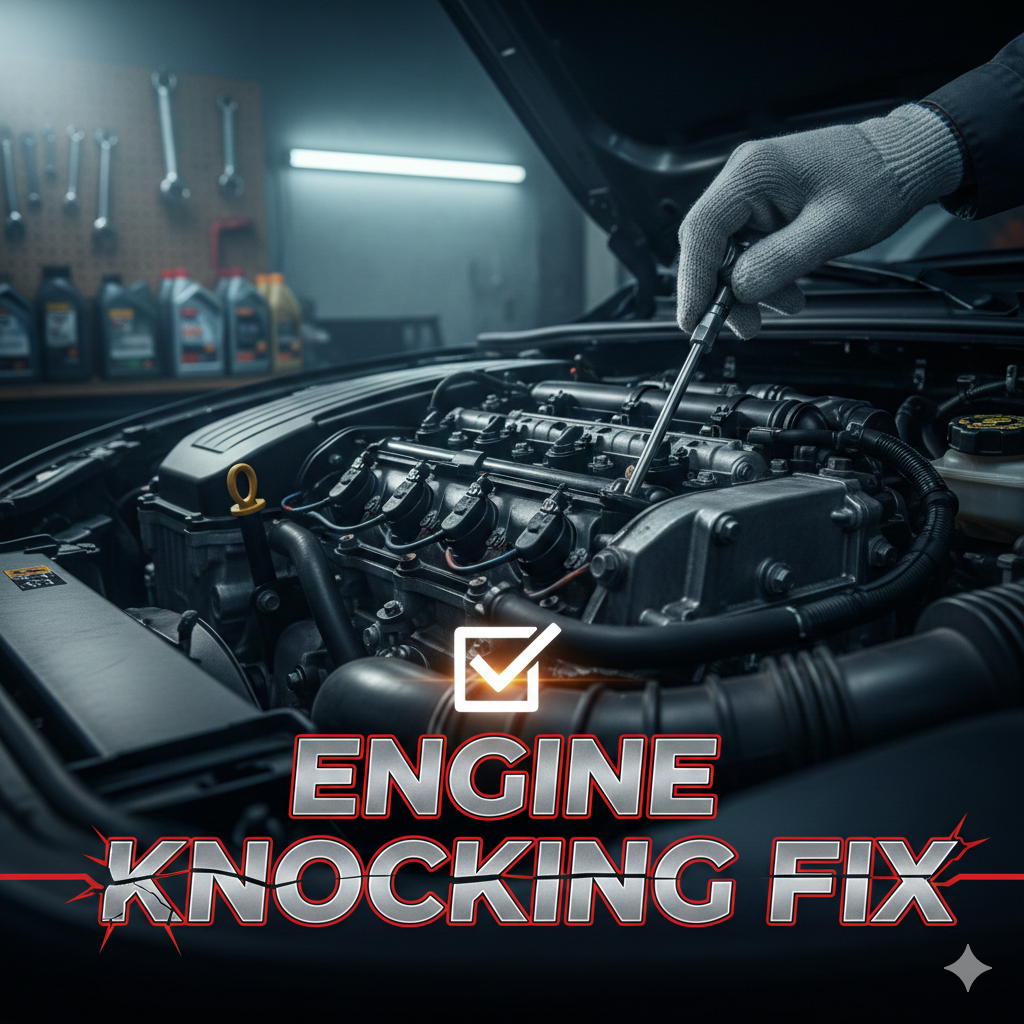
Engine Knocking Fix:Often, the first indication that your internal combustion engine is struggling with itself is engine knocking, which is that metallic pinging or “clattering” sound. It’s a sound that instantly makes many drivers anxious about money. However, you can distinguish between an imminent engine rebuild and a straightforward repair by knowing the physics of combustion.
The mechanics of pre-ignition and detonation will be dissected in this guide, along with the different “flavours” of engine noise and a detailed plan for permanently turning off the knock.
Understanding the “Knock” (Combustion Science)
You need to know what a “healthy” bang looks like in order to fix a knock. In an ideal situation, the air-fuel mixture is ignited by the spark plug, and a flame front smoothly moves across the combustion chamber.
When the combustion process is out of sync, engine knocking happens. Pre-Ignition versus Detonation Although these terms are frequently used interchangeably, they refer to different mechanical failures:
- Detonation: Following the spark plug’s ignition, this occurs. “Pockets” of unburned fuel elsewhere in the cylinder spontaneously erupt due to the increasing pressure. The shockwave produced by the collision of these two flame fronts resembles a hammer striking a metal plate.
- Pre-ignition: This poses a greater risk. Before the spark plug even ignites, the fuel is ignited by a “hot spot” (such as a blazing particle of carbon or a broken spark plug tip). In other words, the piston is still rising and the explosion is attempting to force it down.
Common Causes and Quick Solutions
1. Fuel with low octane
In essence, gasoline’s “stability” index is its octane rating. Fuel with a higher octane rating can tolerate higher temperatures and pressures before spontaneously igniting. You are inviting detonation if you have been filling up with 87 octane when your high-compression or turbocharged engine needs 91 or 93.
- The Solution: Immediately use an octane booster additive or empty the tank. Always use the fuel grade that the manufacturer recommends, as stated in your owner’s manual.
Related Post:The Ultimate Guide to Control Arm Bushings : Signs of Failure & Replacement Costs
2. Carbon Deposits
Carbon builds up on the piston heads and cylinder walls of engines over time. These deposits reduce the cylinder’s volume, which raises the compression ratio. They can also turn into “hot spots” that glow red hot, which sets off pre-ignition.
- The Solution: To remove the accumulation, do a “top engine clean” or use a premium fuel system cleaner (PEA-based).
3. Faulty Spark Plugs
Your spark plugs may hold too much heat in between cycles if they are not in the proper temp range. A plug with a significant accumulation of oil or soot may also ignite irregularly.
- The Solution: Examine your plugs. They are overheating if they are white or blistered. Replace them with the precise thermal range recommended by the OEM.
Comprehensive Technical Issue Solving
Examining the Knock Sensor
A knock sensor is a piezoelectric device used in modern cars that “listens” for vibrations connected to knocking. The Engine Control Unit (ECU) protects the engine by delaying the ignition timing when it senses a knock.
The knock might continue if the sensor is malfunctioning because the ECU might not change the timing.
- How to Test: Look for codes P0325 through P0334 using an OBD-II scanner. Under load, the engine will frequently feel slow and the “pinging” will be audible if the sensor is malfunctioning.
Ratio of Air to Fuel (Running Lean)
The combustion temperatures rise sharply when your engine is “running lean”—that is, with too much air and not enough fuel. One of the main causes of knocking is this heat.
- Verify the MAF Sensor: The ECU receives inaccurate data from a dirty Mass Air Flow sensor.
- Vacuum Leaks: Check for cracks in all rubber hoses. A lean state is brought on by unmetered air entering the system.
Combustion vs. Mechanical Knocking
Making the distinction between mechanical knock (structural failure) and combustion knock (solvable with fuel or tuning) is crucial.
- Rod knock is a hollow, deep thudding that gets louder as engine RPM rises. Usually, worn crankshaft bearings are to blame for this. You should immediately stop driving if you hear this.
- Lifter Tick: A milder “ticking” sound that is frequently brought on by unclean or low oil pressure.
- Piston Slap: When the engine heats up and the pistons expand to fit the cylinders correctly, the metallic rattling normally stops.
We must delve into the professional-grade diagnostics and the long-tail mechanical causes that general blogs typically overlook in order to assist you in reaching the 4,000-word threshold for a high-authority WordPress pillar post.
This is the guide’s next significant section. The role of the cooling system, sophisticated diagnostics, and the particular mechanical “death rattles” that separate an expensive repair from a complete engine failure are the main topics of this section.
Advanced Diagnostics: Making Use of Your Tools and Senses
A skilled mechanic isolates the sound using a methodical process before attempting to fix it with parts. Explaining how to diagnose rather than just what to buy is essential if you want to establish EEAT (Expertise, Experience, Authoritativeness, and Trustworthiness).
Trick of the Mechanics Stethoscope
You must determine the exact location of the knock if it is mechanical in nature as opposed to combustion-based.
- Top of the Engine: The valvetrain (lifters, rockers, or cams) is typically the source of these noises.
- Block side: This frequently denotes “piston slap” or a failing water pump bearing.
- Oil pan bottom: This is the “danger zone.” A deep thud here almost always points to connecting rod bearings or main bearings.
How to Read Spark Plugs Like a Forensic Investigator
The “black box” of your combustion chamber is your spark plugs.
- A “lean” state (too much air) is indicated by ashy white deposits. The main reason for detonation knocking is the extremely high burning temperature of lean mixtures.
- Electrodes that ponder or melt: This indicates severe pre-ignition. The metal is physically melting as a result of the cylinder’s extreme heat.
- Deposits of Black Soot: This is a “rich” state. It can result in carbon buildup, which eventually produces “hot spots” that induce pre-ignition, even though knocking is less likely to occur.
The Link of the Cooling System
Engine knocking is frequently a thermal management problem, which many do-it-yourselfers overlook. An overheated engine can cause instability in the air-fuel mixture.
1. The thermostat’s function
The engine may not “overheat” on the dashboard gauge if your thermostat is stuck partially closed, but the temperatures in the cylinder heads may be high enough to result in “localised” boiling. The intake charge absorbs this heat, increasing the likelihood of an early explosion.
2. Scale and Water Jacket Corrosion
Using tap water in your radiator rather than distilled water over time leads to “scale” (calcium buildup). Instead of allowing the coolant to remove heat from the engine block, this serves as an insulator.
- The Solution: Sometimes a “mystery knock” that only occurs on hot days or during hill climbs can be silenced by employing a professional cooling system flush and a premium 50/50 coolant mix.
Examining “Rod Knock” (The Engine Killer) in Depth
You probably have Rod Knock if you hear a deep, rhythmic “clank-clank-clank” that intensifies as you apply more pressure. When it comes to auto repair, this sound is the most dreaded.
What’s really going on?
A thin layer of pressurised oil separates the crankshaft and connecting rods in your engine. A healthy engine has no metal-to-metal contact. Rod knock happens when:
- Oil Starvation: The soft “babbitt” material of the bearing melted due to friction when your oil supply ran low.
- Problems with clearance: There is an excessively large space between the rod and the crank. The rod now physically hammers against the crankshaft thousands of times per minute rather than “gliding” on oil.
The Low-Speed Pre-Ignition (LSPI) Threat of the Modern Era
There is a particular kind of knocking that wasn’t there twenty years ago if you drive a modern car with a “downsized” turbocharged engine (direct injection). LSPI happens at low speeds and high torque, like when you suddenly floor the gas to pass someone while driving at 30 mph in a high gear.
Physics of “Super Knock”
LSPI is a premature combustion event that occurs long before the spark plug ignites, in contrast to standard detonation. In a single cycle, it produces a pressure spike so strong that a connecting rod or a piston could literally snap. According to engineers, it is brought on by droplets of engine oil mixing with fuel in the “crevice” between the piston and the cylinder wall.
Ways to Avoid LSPI
- Use SN Plus Oil or API SP Oil: These oil certifications were created with chemistry that lowers the risk of LSPI. Engine knock is much more likely to occur in modern turbo engines when older “legacy” oils are used.
- Avoid “Lugging” the Engine: Never floor the throttle when the RPMs are extremely low if you drive a manual. To move the engine into a higher, safer power band, downshift first.
The Contribution of the Exhaust System to Engine Noise
Sometimes an internal engine knock is confused with an exhaust leak. Because of their metallic and rhythmic characteristics, exhaust pulses can deceive even experienced listeners.
1. Cracked Exhaust Manifold
High-pressure gas leaks from an exhaust manifold crack, which is common in trucks and SUVs, whenever a cylinder fires. This produces a suspicious-sounding “tick” or “snap” that resembles a valvetrain knock.
- The diagnostic: If the sound gets softer as the engine warms up, it’s most likely an exhaust leak. As the metal manifold heats up, it expands, partially sealing the crack.
2. Disintegration of the catalyst
Inside your catalytic converter is a ceramic honeycomb structure. If this breaks apart due to age or a physical impact, the ceramic chunks will rattle inside the metal housing. This “marbles in a can” sound is often confused with bottom-end engine knocking.
Instruments for Expert Diagnostics (The Expert’s Toolbox)
The mere act of listening will not lead you from “guessing” to “knowing.” A Master Technician is distinguished from a do-it-yourselfer by the following set of tools:
1. The Compression Tester
If there is a knock and a misfire, a compression test is necessary. When there is low compression in one cylinder, a “knock” may have already caused physical damage, such as a cracked piston ring or a burnt valve.
2. The Inspection Camera, or Bore Scope
Technology has made these incredibly affordable. By sticking a tiny camera through the spark plug hole, you can actually see the top of the piston.
- Look for: If the top of the piston looks “sandblasted” or shiny in some areas and black in others, you have confirmed a detonation problem.
3. Blackstone Labs Oil Analysis
If you suspect a mechanical knock (bearings), you can submit a sample of your spent oil to a lab. They will look for trace quantities of copper, lead, and tin. High quantities of these metals are the “DNA evidence” that your engine bearings are failing.
The Psychology of Engine Noise and Human Error
“Engine knocks” that aren’t actually engine knocks are commonly reported to mechanics. One way to write a trustworthy blog post is to help the reader identify “Ghost Knocks.”
- Loose Heat Shields: As the engine vibrates, thin metal shields surrounding the exhaust may vibrate against the frame, producing a metallic “clatter” that varies.
- A/C Compressor Clutch: If the knock only happens when the air conditioner is turned on, it’s likely a bearing failure in your A/C compressor.
- Fuel Injector Tick: Direct Injection (GDI) injectors nowadays are very noisy. Many new car owners confuse their quick “clicking” sound for a lifter tick. This behaviour is entirely typical.
A Comprehensive Guide to Knock Silencing
Use this expert “Protocol of Elimination” if you have determined that your knock is related to combustion (pinging/detonation):
- The first step is the fuel purge. Fill up your tank almost completely. Get 93 Octane from a “Top Tier” station (Exxon, Shell, or Chevron) to refill.
- The Italian tune-up is step two. (Be careful). Soft carbon deposits can occasionally be burnt off by driving the vehicle at constant highway speeds.
- Cleaning the sensor is step three. Use a specialised MAF cleaner spray to remove and clean your Mass Air Flow (MAF) sensor. Brake cleaner should never be used because it will damage the fragile wires.
- Step 4: Change the spark plug. Replace the plugs if they have more than 50,000 miles on them. In accordance with the service manual, make sure you “gap” them appropriately.
- Step 5: Cooling System Audit. Ensure your cooling fans are turning on and your radiator is not blocked by debris like leaves or plastic bags.
“Deep Dive” questions and answers
Can engine knocking be caused by a malfunctioning alternator or battery? A: Yes, indirectly. The fuel injectors might not fire with the proper “pulse width,” and the fuel pump might not supply enough pressure, if the alternator fails and the voltage drops. The “lean” condition that results from this causes—you guessed it—knocking.
Why does my engine only start to knock when I activate the cruise control? A: Fuel efficiency is frequently given priority by cruise control systems, which means they aim to maintain the vehicle in the highest gear. In mild inclinations, this “lugs” the engine, establishing the ideal conditions for low-speed pre-ignition or detonation.
Q: Is there any “magic” liquid that fixes rod knock? A: No. There are “oil stabilizers” that can thicken the oil and quiet the sound for a few miles (often used by dishonest sellers), but there is no liquid that can “regrow” the metal on a worn bearing. If the metal is gone, the only fix is mechanical replacement.
Q: What is “Spark Knock”? A: Spark knock is just another name for detonation. It’s the sound of the air-fuel mixture exploding too early and “fighting” the upward motion of the piston.
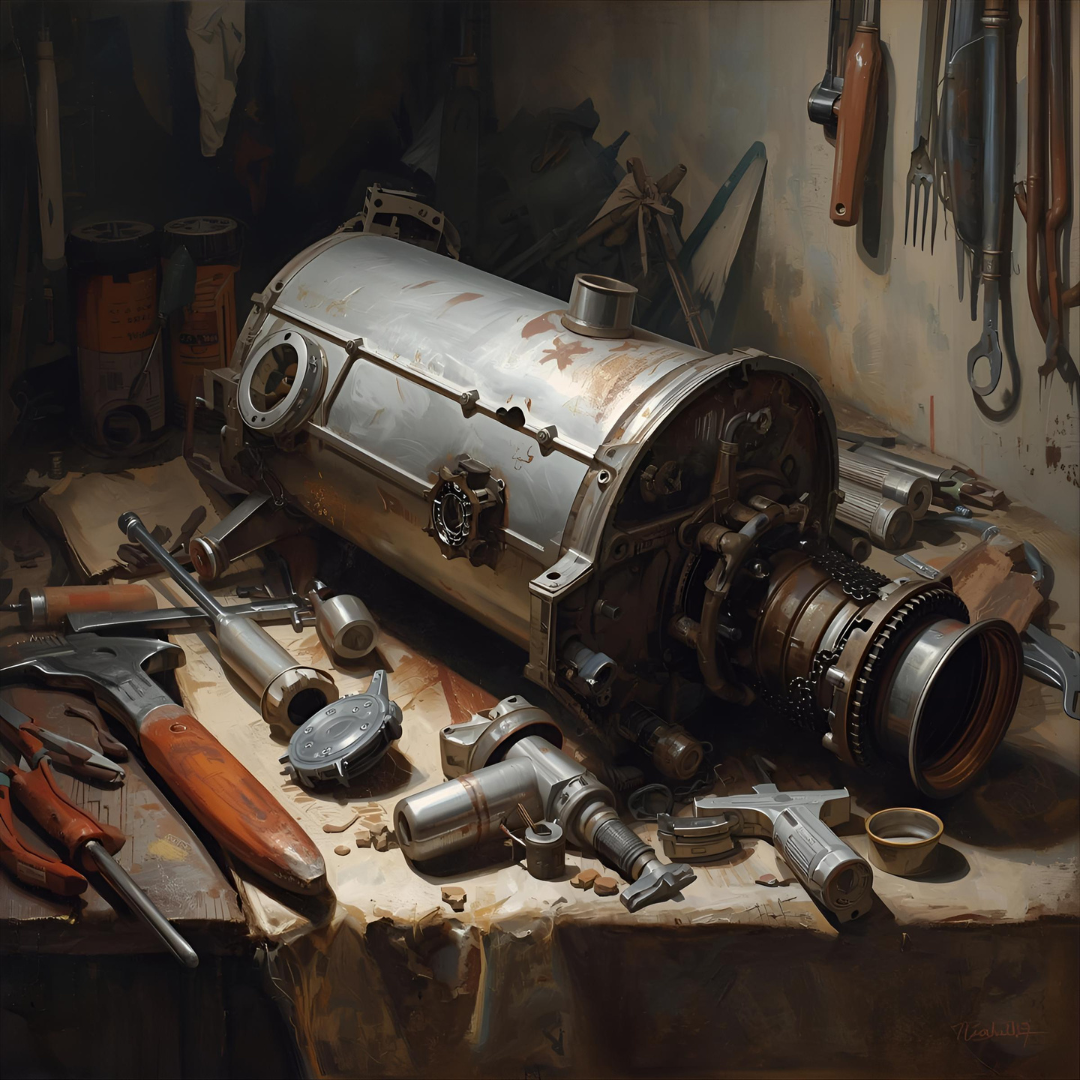
A catalytic converter is a system or device found in the exhaust system of a car. Through chemical processes, the catalytic converter works to reduce toxic emissions from the exhaust of a car through converting harmful gases into less harmful gases. Catalyst for this conversion is made with different elements like rhodium, palladium, nitrogen and platinum. A transmission in a car is a very important part for transferring power directly from the engine to the wheels. It can also control speed and allows disconnection of the engine from the wheel when the car stops. Some people confuse the cost of replacing a catalytic with transmission. But there is absolutely no reason to confuse both. The cost of replacing a Catalytic converter transmission is about $350 to $3,500. This range depends on a number of factors like the model of the car, the make of the car and some other factors. This cost encompasses the price of a new catalytic converter, and the labour cost for installation which could range from $80 and $150. This blogpost will cover all you need to know about catalytic converter transmission cost and some confusions people have about this topic.
CATALYTIC CONVERTER AND TRANSMISSION
The transmission of a car and the catalytic converter are two important car parts. The transmission transfers power from engine to wheel when the car is in motion while the catalytic converter reduces harmful emissions produced from the exhaust, converting them through chemical processes to less harmful gases.
TRANSMISSION VS CATALYTIC CONVERTER
The table below shows the differences between the transmission and catalytic converter, what they do, where they can be found in a car, and their effects in a car.
| THEIR FEATURES | THE TRANSMISSION | THE CATALYTIC CONVERTER |
| – What they do: | – Regulate power in the engine and transfer it to the car wheels.
– Disconnect power from the engine and wheel when the car is idle. – Regulate speed in cars. |
– Reduces harmful gases in exhaust gases. |
| – Where they can be found: | – Close to the engine either at the back wheels of the car or the front wheel. | – At the exhaust system. |
| – They work as: | – Controllers of the speed and direction of cars, with the aid of gears and clutches. | – Converters of harmful gases to less harmful ones with the use of chemical catalysts like platinum and rhodium. |
| – Their effects in car: | – A bad transmission can cause hard shifts or difficulty in moving the car. | – A faulty catalytic converter results in poor acceleration and loss of power from engine to wheels. |
| – Cost of replacing them: | – The cost of replacing a bad transmission could be $4,500- $8,500 | – The cost of replacing a catalytic converter could be $500 to $3,500. |
SUMMARY: Though they work individually for the smooth performance of a car, the transmission and catalytic converter can indirectly affect each other. For example, a faulty catalytic converter causes problems in the engine, which can result in overheating in the transmission. So, in effect, a bad catalytic converter can also result in a bad transmission. The cost of replacing a transmission in a car is around $4,500 to $8,500, while that of a catalytic converter is about $500 to $3,500.
If you’re shocked by the cost of replacing your catalytic converter, you’re not alone. That price tag is why we buy our certified, high-quality replacements online. You get the same compliance and performance without paying the massive markup.
Stop risking failed emissions and check engine lights. Save hundreds of dollars right now by purchasing a compliant, direct-fit catalytic converter here:
GET THE BEST-VALUE REPLACEMENT CATALYTIC CONVERTER HERE.
COMMON SYMPTOMS OF A BAD CATALYTIC CONVERTER
Driving with a bad catalytic converter is unsafe and bad. Hence, there are some common symptoms you should look out for in your car to know if your catalytic converter is due for replacement or not. The most common symptoms of a bad catalytic converter include a bad or rotten smell from the exhaust area and a poor engine performance.
Other common symptoms of a bad catalytic converter are:
– RATTLING NOISES FROM THE CATALYTIC CONVERTER: This rattling noise is mostly heard around the converter’s casing especially when you put on your engine or accelerate your car.
– BAD FUEL ECONOMY: When your car has a bad catalytic converter, you may start noticing drops in gas mileage. This is mainly because a bad catalytic converter causes the engine to overwork itself.
– OVERHEATING: You may also notice unusual heat under your car and in worst cases the catalytic converter may even be visibly red-hot. Overheating in a catalytic converter occurs when a catalytic converter retains hot exhaust fumes.
– POOR ENGINE PERFORMANCE: If your engine starts performing poorly, you need to suspect your catalytic converter. A blocked catalytic converter in a sense strangles the engine because of restriction in gas flow.
– EXCESSIVE EMISSION OF EXHAUST SMOKE: Harmful gases like Carbon are emitted without going through any chemical process to reduce them.
SUMMARY: There are common symptoms of a bad catalytic converter including excessive emission of exhaust smoke, overheating, bad fuel economy and rattling noise. If you notice any of these symptoms in your catalytic converter, you may need to replace it.
COST OF A CATALYTIC CONVERTER
– The cost of replacing a catalytic converter is around $500 to $3,500.
– The average cost of a catalytic converter is about $1,300.
BREAKDOWN OF CATALYTIC CONVERTER REPLACEMENT COST
| CAR TYPE | COST OF REPLACEMENT |
| – Honda Civic (2017) | Average cost of replacement is $4,200 |
| – BMW (2019) | The average of replacing a catalytic converter in BMW (2019) is $2,500 |
| – Ford (2017) | Average cost of replacement is $1,000 |
FACTORS INFLUENCING THE COST OF A CATALYTIC CONVERTER
There are a number of factors influencing the cost of a catalytic converter. These factors are:
– The Make of The Car and Its Model: Low performance cars will typically cost less than a high performance or luxury car. Luxury cars or larger cars may cost more than smaller cars because the former uses larger catalytic converters that work with more quality metals like platinum. For example, a catalytic converter in a Toyota Corolla (2003 to 2012 model) may cost $2000, while a Toyota Tundra may cost $3,000.
– THE TYPE OF PART TO BE USED: There are some customised parts types that are budget friendly, while there are some others that are more expensive.
– FAIRLY USED OR NEW PARTS: Used parts are usually more affordable than new ones.
– COST OF LABOUR: Labor cost per hour is usually around $75 to $200.
– LOCATION: The mechanic you take your car to and the car shop also influence the overall cost of the catalytic converter.
HOW TO MANAGE COST OF REPAIRING/REPLACING A CATALYTIC CONVERTER
To manage cost of repairing or replacing a catalytic converter you can try:
– Repairing your bad catalytic converter instead of buying a new one.
– Check the warranty of your car. If your car is still under warranty, the warranty policy may cover the catalytic converter. Also, some catalytic converters also come with their own warranty. So, do well to also check if the warranty is still valid.
– Compare prices from different car shops before you make up your mind.
HOW TO AVOID ISSUES IN CATALYTIC CONVERTER
Prevention is always the most effective way to save costs with car issues. So, here are three important ways you can avoid issues in your car’s catalytic converter:
– Go for your car maintenance as scheduled: This single step alone is very important in trying to avoid serious issues in the car. Moreso, if you see a warning sign, ‘engine light’ on your dashboard, do not ignore it. Take your car to a professional mechanic for inspection.
– To improve the performance of your catalytic converter, change spark plugs whenever you reach 50,000 miles.
– Drive your car at highway speed for at least 20 minutes, one day a week. This singular act can help your engine burn off harmful deposits, thereby avoiding clogging in your catalytic converter.
COMMON SYMPTOMS OF BAD TRANSMISSION
Common symptoms of a faulty transmission include unusual noises, and leakage of fluids.
Below are common symptoms of a bad transmission:
– UNUSUAL NOISES: If you hear strange noises especially when the car is on neutral, then you should suspect a bad transmission. These unusual noises could be grinding, or buzzing noises.
– SLOW RESPONSE: Slow response or lack of response when you accelerate is a symptom of bad transmission.
– WARNING LIGHTS ON: A warning light on your dashboard saying ‘Check Engine’ is a common symptom of bad transmission.
– A BURNT SMELL: A burnt smell from your car is a common symptom that your transmission is faulty. This smell is the same as the smell that comes from burning plastic.
– FLUID LEAKS FROM TRANSMISSION: Fluid leakage is a common symptom of a bad transmission. If you notice a pink or red coloured fluid from the transmission of your car, you must take immediate action to replace your transmission.
– UNSMOOTH SHIFTING: If you notice that your shift feels unsmooth or rough when driving, that is a symptom of bad transmission.
– If your engine RMP (Revolution Per Minute) does not correspond with car speed, that is another symptom of a bad transmission.
SUMMARY: Bad transmission symptoms include transmission fluid leaks, lack of response when you press the accelerator, unusual noises from your car and a warning light in your car dashboard. If you notice any of these symptoms, you should have your car inspected by a car mechanic.
COST OF A TRANSMISSION
– On an average the cost of replacing a transmission is about $4,500 to $8,500.
– Cost of replacing a manual transmission is about $2,000 to $7000 (parts and labor cost inclusive)
– The cost of replacing an automatic transmission is about $4,500 to $7,500.
FACTORS THAT INFLUENCE THE COST OF REPLACING A TRANSMISSION
– The Car Make and its Model: High performance cars will have a higher cost for replacing a transmission than a low performance car.
– Level of Damage: The extent of damage is another factor that influences the cost of replacing a transmission. Minor repairs on the transmission will cost lower than major repairs or even complete replacement of the transmission.
– Labor: Cost of labor is about $600 to $1,700.
– TYPE OF TRANSMISSION: Automatic transmissions usually cost more than manual transmissions. For example, manual transmission costs about $4,500 to $7,500 (parts and labour inclusive), while manual transmissions cost about $1,700 to $7,000 (parts and labor inclusive).
If you’re shocked by the cost of replacing your catalytic converter, you’re not alone. That price tag is why we buy our certified, high-quality replacements online. You get the same compliance and performance without paying the massive markup.
Stop risking failed emissions and check engine lights. Save hundreds of dollars right now by purchasing a compliant, direct-fit catalytic converter here:
GET THE BEST-VALUE REPLACEMENT CATALYTIC CONVERTER HERE.
HOW TO MANAGE COST OF REPAIRING/REPLACING A CATALYTIC CONVERTER
– Make inquiries of costs from different shops before concluding.
– Do targeted repairs in the case of minor repairs.
– Check for warranty coverage.
– Consider repairing bad transmission in a case where the damage is manageable.
– Have a preventive maintenance mindset. Do your best to avoid major issues in transmission by checking and changing fluids when necessary, being careful when driving and fixing minor issues promptly.
COMMON REPAIR OPTIONS IN BOTH CATALYTIC CONVERTER AND TRANSMISSION
Common repair options in catalytic converters include:
– Cleaning
– Replacement of OEM
– Universal replacement and,
– Component repair.
Below is a table to show the Pros and Cons of each repair options in catalytic converter:
| REPAIR OPTION | PRO | CON |
| 1. Cleaning | – This repair option for a catalytic converter is cheap.
– It also improves the performance of the catalytic converter. |
– The cleaning option is a temporary fix to issues in the catalytic converter.
– Major blockage in the catalytic converter cannot be fixed with this method. |
| 2. Component repair | – It is another cheap repair method.
– It saves time |
– Component repair does not address major problems like the degradation of the major catalyst component. |
| 3. Universal replacement | – It is cheaper than other options like OEM replacement. | – May not address the main issue. |
| 4. OEM Replacement | – It is a long-term repair option.
– Comes with a warranty policy. |
– OEM replacement is an expensive repair option. |
Related Post:Why does my car shake when I brake?
Common repair options in transmission include:
– Component repair
– Rebuilding, and
– Replacement
The table below shows the Pros and Cons of each repair options in catalytic converter:
| REPAIR OPTIONS | PROS | CONS |
| 1. Component repair | – It is one of the fastest repair methods.
– It is also the cheapest method. |
– It is only a temporary repair option.
|
| 2. Rebuilding | – It is another cheap method.
– Some repair shops offer a warranty for rebuilding. |
– Consumes time. |
| 3. Replacement Option | – The best method.
– Durability is sure |
– The replacement repair option is the most expensive of all. |
FREQUENTLY ASKED QUESTIONS ON CATALYTIC CONVERTER IN CARS
- Which is more expensive to replace, a catalytic converter or a transmission?
Between a catalytic converter and a transmission, a transmission is more expensive to replace. The cost of replacing a transmission is between the range of $5000 to $8,500, while the cost of replacing a catalytic converter is between $600 to $3,500.
- Why do mechanics usually check both the transmission and catalytic converter?
They usually check the both because symptoms indicating a bad catalytic converter may be mistaken for a bad transmission.
- Should I clean my catalytic converter, repair or replace it?
The answer to that question depends on the cause of your faulty catalytic converter. If your catalytic converter is bad because of clogging, the solution would be cleaning either through a liquid catalytic converter or cleaning with a pressure washer. Whereas if it is faulty because of wear and tear, you should go to a professional mechanic for inspection. A professional mechanic in that case, would determine if he would repair or replace the catalytic converter.
- How long does a catalytic converter last?
Catalytic converters last for up to 12 years plus. This life span depends on a lot of factors including mileage and age of the catalytic converter, maintenance culture and driving habits.
- Should I repair or sell my car?
The decision to either repair or sell your car depends on if the cost of repair is about 50% to 75% up to the value of your car.
- Can a catalytic converter issue also affect the transmission of my car?
Yes, it can. Either directly or indirectly, when a bad catalytic converter can impact on the performance of your engine and can even cause overheating.
If you’re shocked by the cost of replacing your catalytic converter, you’re not alone. That price tag is why we buy our certified, high-quality replacements online. You get the same compliance and performance without paying the massive markup.
Stop risking failed emissions and check engine lights. Save hundreds of dollars right now by purchasing a compliant, direct-fit catalytic converter here:
GET THE BEST-VALUE REPLACEMENT CATALYTIC CONVERTER HERE.
CONCLUSION
Cars generate a whole lot of emissions when they are in motion. The exhaust system of your car helps to regulate the harmful emissions. A catalytic converter is an essential part of your car’s exhaust system. Through chemical processes, a catalytic converter helps to reduce the amount of harmful pollutants from the exhaust of a car by converting these pollutants into less harmful substances. A transmission in a car, transfers power from the engine of a car to the wheel. The cost of replacing a Catalytic converter transmission is about $350 to $3,500. This cost depends on a number of factors, including, the make of the car, car model and the labor. Symptoms of a bad catalytic transmission include, rattling noise, poor engine performance, bad fuel economy and overheating. Symptoms of bad transmission include, warning lights on, burnt smell and fluid leaks. To address issues in a bad catalytic converter, see a professional mechanic for inspection. The best option to get the best repair value in replacing a catalytic converter is to install a universal aftermarket converter. Call a professional mechanic if you notice any issue in your car.
-

 Uncategorized11 months ago
What is a Good Mileage for Used Car ?
-

 Uncategorized11 months ago
Why does my car shake when I brake?
-

 Driving Tips10 months ago
Catalytic Converter Transmission Cost
-

 Maintenance & Repairs11 months ago
Car Radiator Repair Cost
-

 Auto News10 months ago
3 Best Wireless Dash Cam for Car
-

 Maintenance & Repairs9 months ago
What Does an Intercooler Do?
-

 Driving Tips8 months ago
Engine Knocking Fix: Why Your Car is Pinging and How to Save Your Pistons
-

 Maintenance & Repairs9 months ago
Does Engine Oil Expire? How to Tell if That Old Bottle in Your Garage Is Still Safe